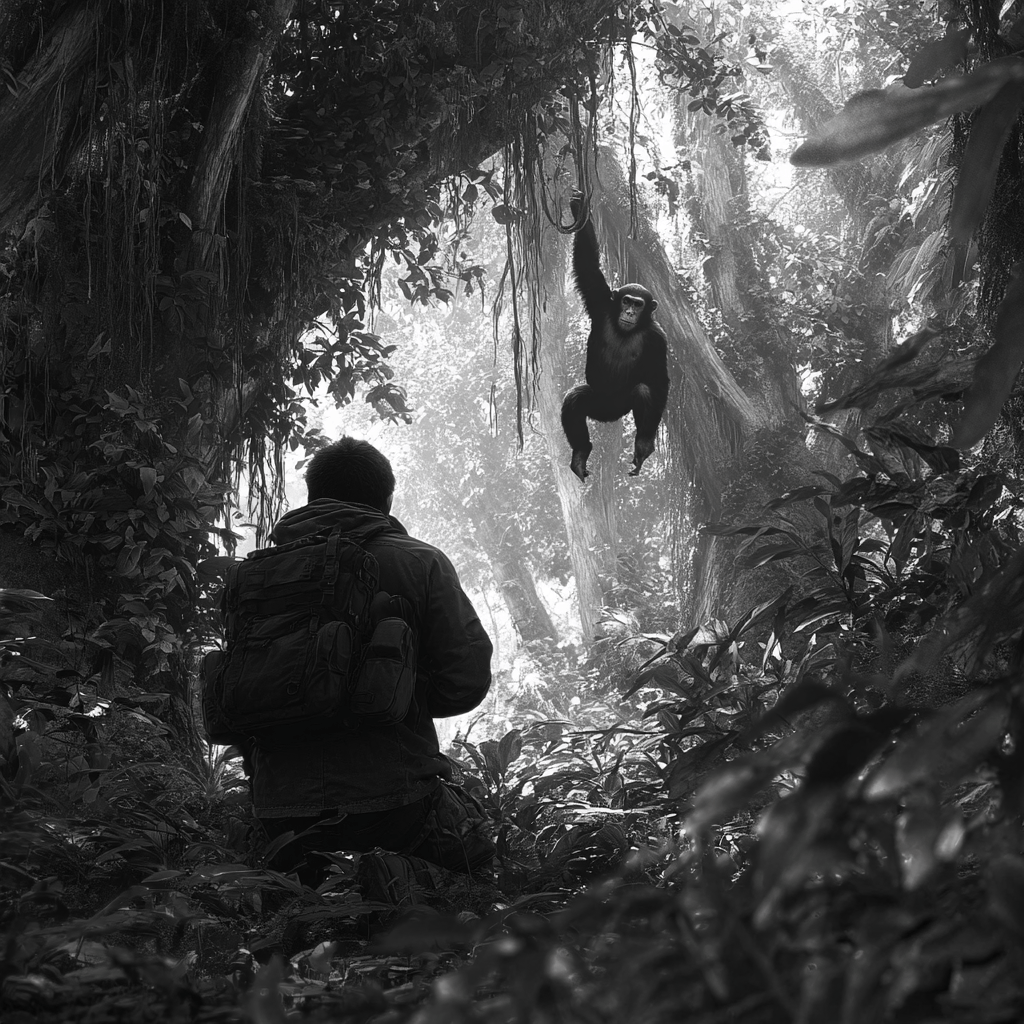
Quiet movement starts before you even step into the forest. Guides will brief you at the trailhead: no loud talking, phones on silent, no rustling gear. Once you're walking, tread lightly, place feet slowly to avoid snapping twigs or crunching leaves. Step where the guide steps, follow single file. If you need to communicate, use hand signals or very soft whispers. Sudden noises like coughing, laughing, or dropping something can send a whole troop scattering or make them go silent and hide for hours.
Group size limits help a ton. Most ethical primate tracking keeps groups small, usually 6-8 people max, sometimes less for apes like gorillas or chimps. Smaller groups mean less noise, less scent, less visual impact. In places like Rwanda or Uganda for gorillas, it's strictly 8 per group. For monkeys in South America or Asia, some reserves cap at 4-6. If you're in a larger tour, ask about splitting into smaller tracking parties. Big groups stress primates fast, they see us as a threat and can change behavior or move away from their usual areas.
No-flash photography is non-negotiable. Flashes blind them, especially in the dim forest light, and can cause panic. Turn off flash completely, use natural light, higher ISO, slower shutter if needed. Many guides will remind you to keep cameras quiet too, no loud clicks or beeps. If you're using a phone, mute it and cover the screen light. The goal is to capture the moment without them knowing you're there. Sometimes primates get curious and come closer on their own, that's when you get the best shots, naturally.
Habitat preservation ties into all of it. Stay on designated trails, never step off to get a better angle or chase a sighting. Off-trail wandering tramples plants, disturbs soil, and can spread invasives or diseases. Don't leave anything behind, not even a tissue or wrapper. Some forests have strict no-food rules, no eating or drinking on the trail to avoid attracting animals or leaving scraps. Support operators that work with local communities, pay fair wages, and put money back into conservation, like anti-poaching patrols or reforestation.
Extra tips: Wear neutral, earthy colors, nothing bright that stands out. Long sleeves and pants protect from insects and plants, plus blend in better. Bring binoculars instead of pushing close for views. Listen to your guide always, they know the troop's mood, if the animals seem agitated (alarm calls, branch shaking, moving higher up), back off immediately.
When done right, forest tracking feels almost magical. You watch a family of howler monkeys calling at dawn, or chimps using tools, or gibbons brachiating overhead, all while they carry on like you're not even there. That's the real reward, seeing primates on their terms, not ours. Keep it quiet, keep it small, keep it respectful, and the forest stays healthy for generations. If you're planning one of these trips, choose ethical outfits and prepare to be patient, it's worth every silent step!