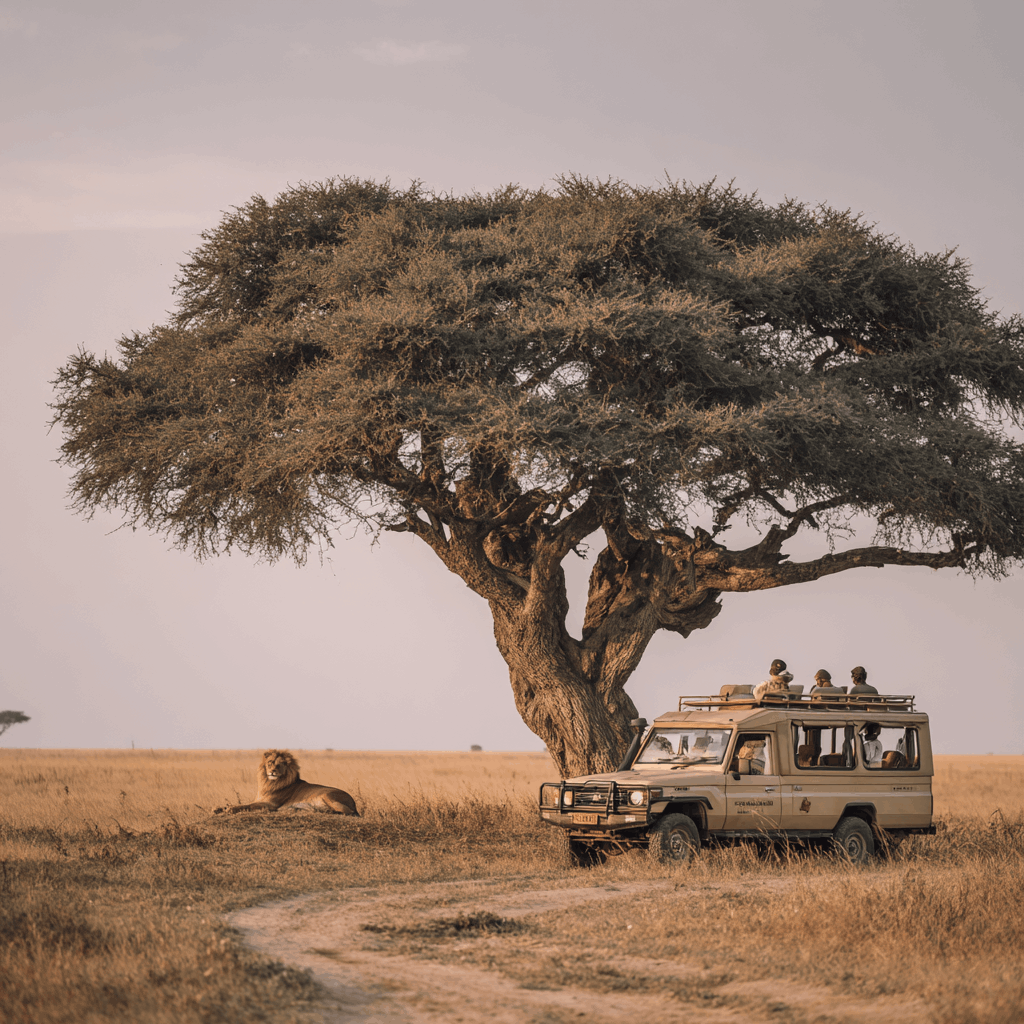
First big rule: stay inside the vehicle at all times. No getting out to take a better photo, no standing on seats, no dangling arms or legs over the side. Big cats might see movement as a threat or curiosity, and once you're on foot, you're way more vulnerable. The vehicle is your safe zone, it smells like humans but the animals are used to them rolling around, so they usually ignore it if you behave.
Stay quiet, super quiet. No shouting, no loud talking, no music from phones. Big cats have amazing hearing, sudden noises can stress them out or make them defensive. Whisper if you need to point something out, but honestly, hand signals work better. Guides will talk low when explaining tracks or behavior. If the cat is hunting or with cubs, even quieter, they need focus.
Never feed animals, ever. Not even a little snack to lure them closer. Feeding makes them associate vehicles with food, which is dangerous for future visitors and can get the animal habituated in a bad way, sometimes leading to relocation or worse. Same goes for throwing anything out, no litter, no water bottles, nothing.
Recognizing warning signs is key to staying safe. Lions might give a low growl, flick their tail hard, stare directly at you with ears back, or start walking toward the vehicle slowly. Leopards are sneakier, they might flatten ears, show teeth, hiss, or disappear into bushes if annoyed. Cheetahs are usually shyer, but if they feel cornered they can charge fast. If you see any of these, your guide will back the vehicle away slowly, no sudden reverses. Don't panic, don't stand up, just let the guide handle it.
Positioning matters too. Guides try to approach from downwind or side-on, never head-on blocking the path. They keep a respectful distance, usually 20-30 meters minimum, closer only if the animal approaches the vehicle on its own. If multiple vehicles are at a sighting, they rotate, no crowding, no blocking escape routes. That's called "good safari etiquette" among guides, keeps stress low.
Other quick dos and don'ts: No flash photography, it can blind or startle them, especially at dusk or night. Turn off phone flashes, use natural light or vehicle spotlights if the guide uses them. Dress in neutral colors, nothing bright white or neon, it stands out too much. And follow the park rules, some places have strict no-off-road driving to protect habitat.
These guidelines make for safe, non-intrusive encounters that feel magical instead of risky. You get to watch a lion pride lazing in the shade, or a leopard draped over a branch, all while the animals go about their day undisturbed. It's about patience, respect, and trusting your guide. Do it right, and you'll leave with incredible memories, and the cats stay wild and healthy. Safe travels out there!