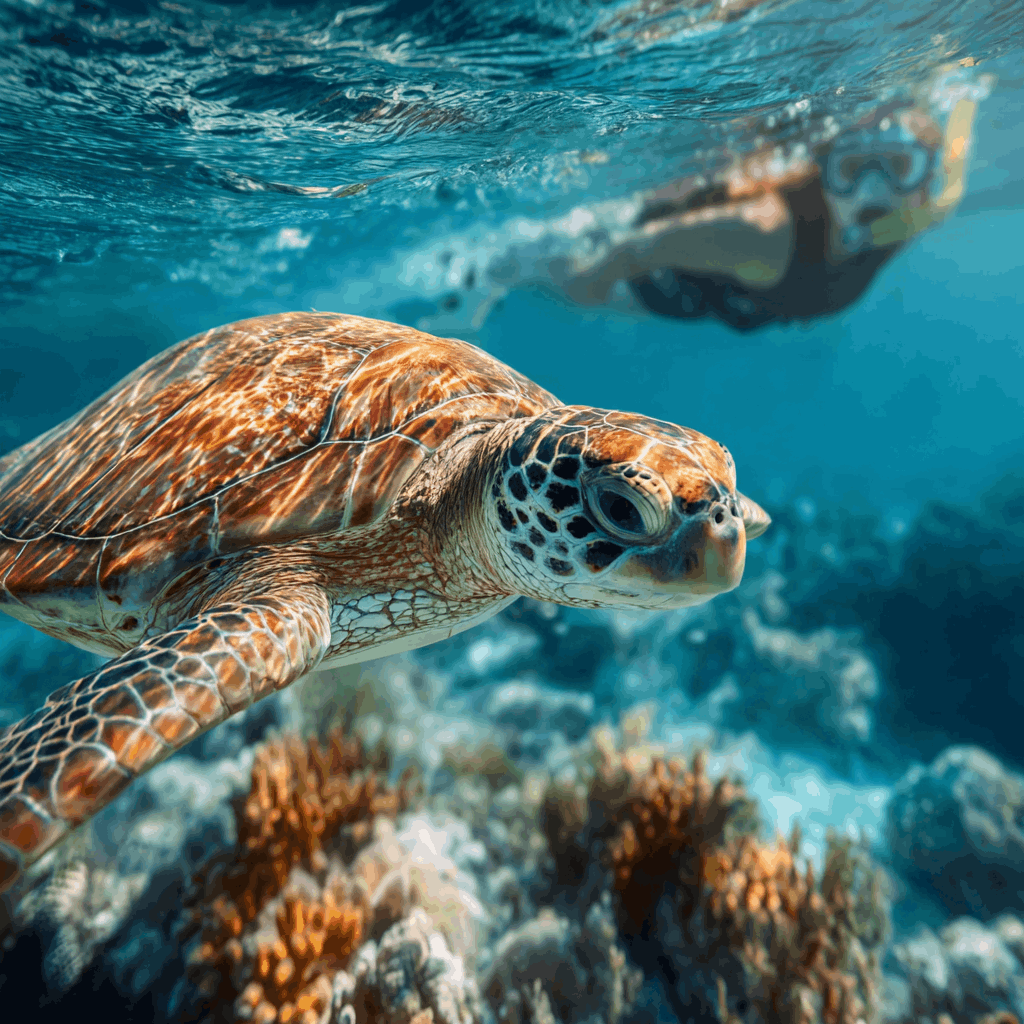
First, floating calmly is everything. When you enter the water, don't splash or kick wildly, ease in slow. Once you're snorkeling, keep your movements smooth and slow, like you're drifting with the current. Fast kicks or sudden turns send out pressure waves that spook fish and can stress turtles. If you see a turtle coming your way, just hover still, let it approach or pass on its own terms. Turtles are curious sometimes and might swim right by you, but if you lunge or follow, they'll bolt. Same with fish schools, stay on the edge, don't dive into the middle.
Never touch anything. No poking corals, no grabbing sea stars, no petting turtles or fish. Even gentle touches can damage delicate tissue, spread bacteria, or remove protective slime layers on fish. Turtles especially hate being touched, it stresses them out big time and can make them avoid areas where people snorkel. If a fish or turtle bumps into you by accident, just stay still, don't react by reaching out.
Use eco-friendly gear to help keep the water clean. Choose reef-safe sunscreen, the kind without oxybenzone or octinoxate, those chemicals bleach coral and harm marine life. Lots of brands make clear, safe versions now. Wear rash guards or wetsuits instead of slathering on lotion everywhere. Fins should fit well so you don't kick up sand clouds that smother corals. And if you're renting gear, pick places that clean it properly to avoid spreading diseases between sites.
Other tips for low-impact snorkeling: Don't feed the fish, ever. It messes with their natural diet, makes them dependent, and can attract aggressive species. Keep your distance, aim for at least a few meters from any animal, closer only if they choose to come nearer. Don't stand or walk on the reef, even shallow areas, your weight and fins can break fragile branches. If you're in a group, spread out a bit, don't crowd one spot.
Pay attention to the animal's behavior. If fish start scattering, a turtle starts swimming faster away, or you see it looking stressed (puffing up, rapid fin movements), back off slowly. That's your cue to give more space. Guides on boat trips are great for this, they know the signs and will signal when to move away.
Snorkeling etiquette is pretty straightforward once you get it. Float calm, no touching, eco gear, respect signals from the animals, and you'll have those magical moments where a sea turtle cruises right past you like you're not even there. It feels more special that way, knowing you didn't bother them. The ocean is their home, we're just visitors, so let's leave it better than we found it. Grab that mask and snorkel, breathe easy, and enjoy the show responsibly!